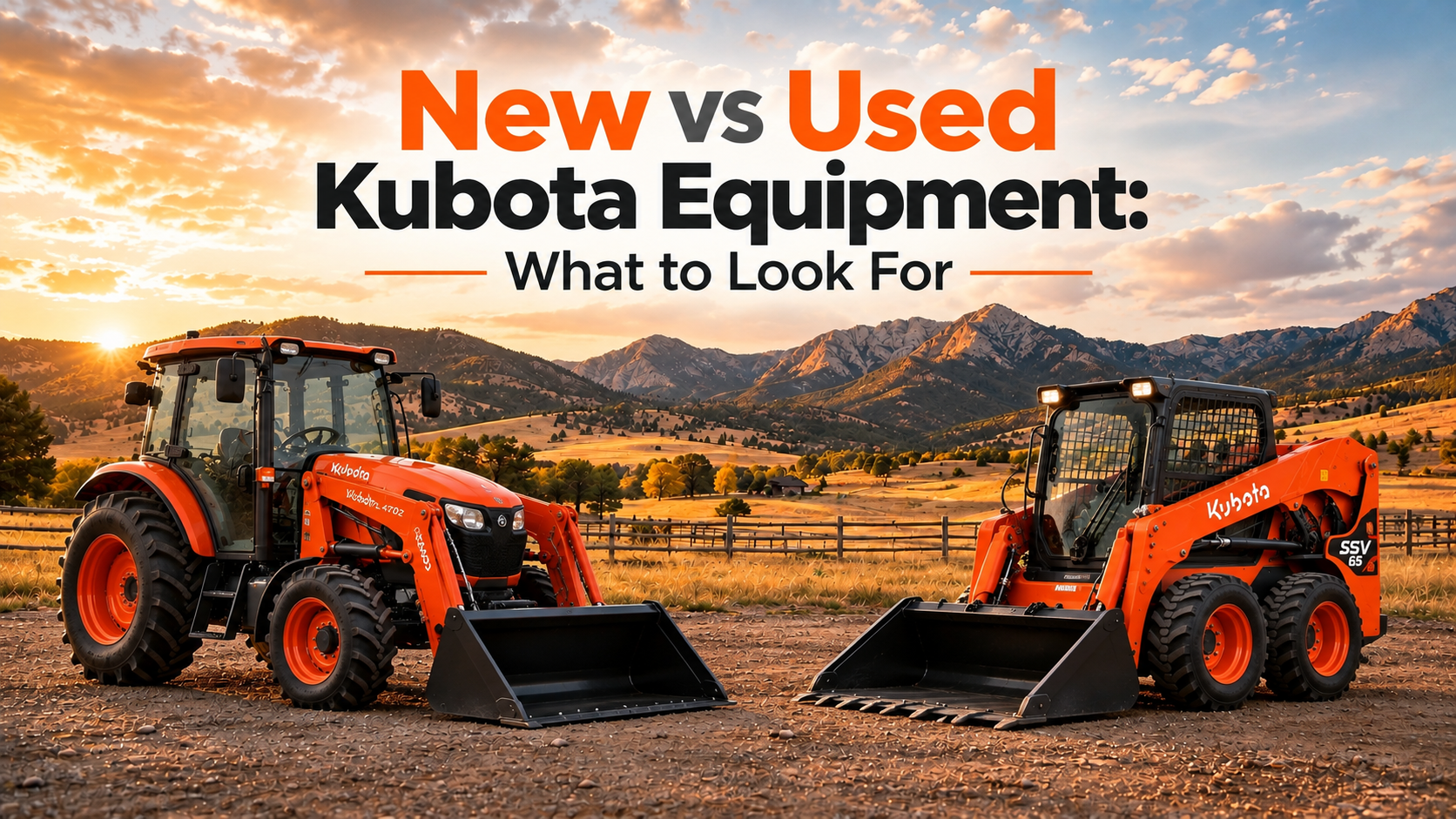

New vs Used Kubota Equipment: What to Look For
10/29/2026

Should You Buy New or Used Kubota Equipment?
Whether you’re buying your first tractor for a few acres outside Parker or adding a machine to a working ranch, here’s how to weigh the two options and inspect a used Kubota before you buy.
Benefits of Buying New Kubota Equipment
Benefits of Buying Used Kubota Equipment
What to Look for When Buying a Used Kubota
A careful inspection is the best way to avoid surprises. Here's what to check before you buy.
Hours and service history
Engine
Hydraulics and drivetrain
Loader and attachments
- Check pins and bushings for excessive play.
- Inspect the loader frame and bucket for cracks, bends or welded repairs.
Tires, frame and electrical
Questions to Ask Before Buying Used
New vs Used Kubota at a Glance
How to Decide Which Is Right for You
New may be the better fit if you plan to put a lot of hours on the machine, want warranty protection, need a specific model or configuration, or want the latest features.
Used may be the better fit if you're working with a tighter budget, only need the machine for occasional jobs, or want to step up in size for the same money.
Either way, plan to follow Kubota's hour-based maintenance schedule from day one. Regular service is what keeps any Kubota, new or used, running for years.
Shop New and Used Kubota Equipment at Kubota of Denver
Once you're up and running, our factory-trained technicians are here to keep your Kubota on schedule with genuine Kubota parts and filters.